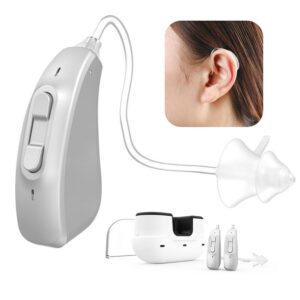
Bone conduction hearing Aids are specialized hearing devices designed to help individuals with certain types of hearing Loss, especially conductive hearing loss, mixed hearing loss, or single-sided deafness. Unlike traditional hearing aids that amplify sound through the ear canal, bone conduction hearing aids transmit sound vibrations directly to the inner ear (cochlea) through the bones of the skull. This unique method bypasses the outer and middle ear entirely.

These devices work by converting sound into vibrations. A small device is placed on the bone behind the ear (usually the mastoid bone), either through a headband, adhesive pad, or surgically implanted device. The vibrations travel through the skull to the cochlea, where the auditory nerve then processes the sound signals and sends them to the brain. Because the outer and middle ear are bypassed, bone conduction hearing aids are particularly beneficial for people with ear canal blockages, chronic ear infections, or malformations of the ear.
Bone conduction hearing Aids come in two main types: non-surgical (bone conduction headbands or spectacles) and surgical (bone-anchored hearing aids, or BAHAs). Non-surgical options are ideal for children or those who prefer not to undergo surgery. Surgical options are typically more discreet and provide better sound transmission.
Overall, bone conduction hearing aids are a valuable solution for people who cannot benefit from conventional hearing aids. They offer clear sound quality and improved hearing comfort, making daily communication easier and more effective.