Is It Time for a Replacement? Here’s How to Tell and Why It Matters.
One moment you’re enjoying a clear conversation, and the next—silence, or worse, a crackling, distorted mess. If your hearing Aids have ever suddenly failed you, you know the feeling of instant isolation. Often, the culprit behind this frustrating experience isn’t the main body of the device, but a tiny, yet mighty, component working deep inside your ear canal: the hearing aid receiver (or speaker). Understanding this little powerhouse is key to maintaining your hearing clarity and peace of mind.

More Than a Mini-Speaker: The True Role of the Receiver
While many people think of it as a simple miniature speaker, the receiver’s job is far more precise and demanding. It’s the final, critical link in the sound chain. After the microphone picks up sound and the computer chip processes it, the receiver is tasked with converting those complex digital signals back into the exact, clear sounds you hear.
I recall a client who came in complaining that his violin music suddenly sounded “like a cheap radio.” The problem wasn’t the programming; it was a failing receiver that could no longer accurately reproduce the high frequencies. This experience really drives home that the receiver is the artist that paints the soundscape in your ear. Unlike a standard speaker, it’s engineered to operate in the harsh environment of the ear—dealing with moisture, earwax, and constant physical stress—all while delivering exceptional sound fidelity.
A Practical Guide: 5 Tell-Tale Signs Your Receiver is Failing
How can you tell if your sound issues are receiver-related? Watch for these specific signs:
Intermittent Sound or Cutting Out: The sound comes and goes, especially when you move your head or touch the hearing aid. This often points to a broken wire inside the receiver’s thin cable.
Distorted or “Scratchy” Sound: Voices and music sound fuzzy, cracked, or robotic, even in quiet environments. This is a classic symptom of a receiver on its last legs.
Complete Silence (But the Device is On): Your hearing aid powers up, but you hear absolutely nothing. Before you panic, check the wax filter, but if that’s clear, a dead receiver is a likely cause.
Unexpected Volume Drops: The sound level suddenly becomes much softer than your set program, indicating the receiver is struggling to perform.
Sound is “Off” or Tinny: The sound is just… wrong. It lacks the richness and fullness you’re used to, making speech difficult to understand.
Your Action Plan: 3 Paths When Failure Strikes
So, you suspect a receiver issue. Here’s what to do:
The First Line of Defense: Basic Checks. Always start with the simplest solutions. Check and replace the battery. Then, carefully inspect and change the receiver wax filter. A clogged filter is the most common cause of low volume or no sound and is an easy, inexpensive fix.
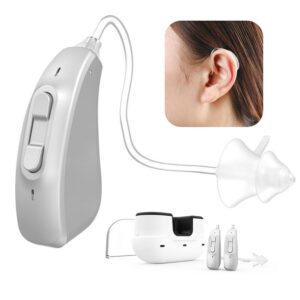
Seek Professional Diagnosis and Repair. If basic checks don’t resolve the issue, it’s time to see your hearing care professional. We have the tools to diagnose the problem definitively. In many cases, especially with Receiver-in-Canal (RIC) models, the receiver is a modular unit that can be replaced quickly and efficiently, getting you back to clear hearing without the cost of a whole new device.
Consider an Upgrade. If your hearing aids are older, a receiver failure can be an opportunity. Receiver technology is constantly improving. Upgrading to a new, more powerful, or more resilient receiver can sometimes offer you even better sound quality than you had before.
Don’t let a failing component silence your world. The receiver, though small, plays an outsized role in your daily listening experience. By recognizing the warning signs and taking prompt, professional action, you can ensure that this tiny powerhouse continues to deliver the rich, clear sound you rely on. If any of these signs sound familiar, we’re here to help you listen to life, without interruption.