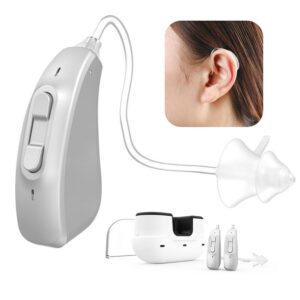
hearing Aids can be very helpful for people with tinnitus, which is the perception of sound (like ringing, buzzing, or hissing) in the ears or head without an external sound source. Here’s how they help:
Amplification of External Sounds
Primary benefit: hearing aids amplify ambient sounds, which helps mask the internal sounds caused by tinnitus.
For many people, especially those with hearing Loss, the brain is deprived of external sound input. It may respond by generating phantom sounds (tinnitus). By restoring environmental sounds, hearing aids can reduce the contrast between tinnitus and silence, making the tinnitus less noticeable.
Improved Auditory Stimulation
Hearing aids stimulate the auditory system, which may reduce the brain’s tendency to “fill in the gaps” with tinnitus.
This improved stimulation may reduce the perception and intrusiveness of tinnitus over time.
Built-In Tinnitus Maskers
Many modern hearing aids come with tinnitus-masking features, such as white noise, nature sounds, or customized sound therapy programs.
These sounds can be used to further reduce the awareness of tinnitus, especially in quiet environments.
Enhanced Communication and Reduced Stress
Hearing loss and tinnitus often make communication difficult, leading to frustration and stress — both of which can worsen tinnitus.
By improving hearing and making conversations easier, hearing aids can reduce stress, which can indirectly lessen tinnitus severity.
Improved Sleep and Concentration
By managing tinnitus better during the day, some users find it easier to relax, concentrate, and sleep, which are often negatively impacted by tinnitus.
Who Benefits Most?
People with both hearing loss and tinnitus tend to benefit the most from hearing Aids.
For those with normal hearing, specialized tinnitus sound therapy devices (not necessarily hearing aids) may be more appropriate.