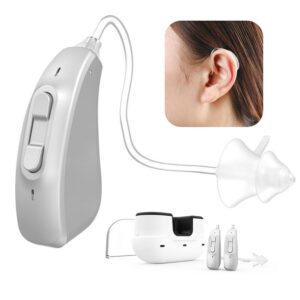
Bluetooth hearing Aids have become a major advancement in modern hearing technology, offering direct streaming, hands-free calling, and app-based control. These features can significantly improve daily listening comfort—but they also introduce challenges that every buyer should evaluate before choosing a device.
As hearing-care professionals consistently emphasize, understanding both the benefits and limitations of Bluetooth hearing Aids is essential for making an informed, long-term decision. This guide provides an evidence-based, expert-level overview of the key disadvantages, who may be affected, and how to choose the right device for your hearing needs.

How Bluetooth Hearing Aids Work
Bluetooth hearing aids use wireless radio-frequency transmission to connect to smartphones, tablets, televisions, and other audio sources. Most modern models rely on Bluetooth Low Energy (BLE), a power-efficient standard optimized for hearing aids. BLE supports:
Two-way audio streaming
Low-latency data transfer
Reduced power consumption compared to Classic Bluetooth
However, the technology still requires complex coordination between the hearing aid chip, smartphone operating system, and app software—which explains why users sometimes encounter technical issues.
- Higher Battery Consumption
One of the most frequently reported disadvantages is increased power usage.
Why this happens (Technical Insight):
Bluetooth streaming keeps the wireless chipset continuously active, requiring far more energy than standard amplification.
Real-world impact:
Streaming music or calls can reduce battery life by 30–50%
Rechargeable models may need mid-day charging for heavy users
Disposable-battery devices require more frequent replacements
For users who rely on long operating hours—such as warehouse workers or frequent travelers—this can be a significant inconvenience.
- Connectivity Instability
Even with advanced Bluetooth protocols, connectivity issues remain common among hearing-aid users.
Typical problems include:
Pairing failures or slow connection times
Random disconnections during phone calls
Interference in areas with strong Wi-Fi or Bluetooth congestion
Need to “reset” or re-pair after software updates
Expert Note:
Audiologists report that connectivity reliability varies significantly across brands and phone models. This means even a top-tier hearing aid may perform poorly with outdated or incompatible smartphones.
- Audio Latency (Delay)
Latency refers to the slight delay between the source audio and what the listener hears through the hearing aid.
Why latency occurs:
The signal must be:
Captured
Processed
Transmitted via Bluetooth
Decoded in the hearing aid
Output through the speaker
Even a small delay can become noticeable.
When it matters most:
Watching movies (lip-sync mismatch)
Video calls
Gaming or real-time audio cues
For users sensitive to timing, this delay can affect communication clarity.
- Limited Smartphone Compatibility
Bluetooth hearing aids do not behave consistently across different devices.
Compatibility challenges include:
Older Android models often lack the necessary Bluetooth profiles
iOS generally provides more stable connectivity, but not universally
Certain features (like true hands-free calling) may only work on newer devices
Firmware mismatches can reduce performance
Professional Insight:
Before purchasing, audiologists recommend testing the hearing aid with your actual smartphone—not a demo unit.
- Higher Overall Cost
Bluetooth-equipped models are typically more expensive due to:
Additional wireless hardware
More advanced processors
App development and software support
Licensing and certification
Long-term costs may include:
Replacement chargers or cables
Premium accessories (TV streamers, remote microphones)
Professional service fees for updates and adjustments
For cost-conscious buyers, these added expenses may outweigh the benefits.
- Increased Complexity for Non-Technical Users
Bluetooth hearing aids require more interaction than traditional models.
Common difficulties for seniors or first-time users:
Pairing devices and managing multiple Bluetooth connections
Navigating smartphone apps
Understanding firmware update prompts
Reconnecting devices after accidental disconnections
Expert Recommendation:
Users who prefer simple, “set-it-and-forget-it” hearing aids may find Bluetooth technology unnecessarily complicated.
- Minor Security and Privacy Considerations
Bluetooth is generally safe when properly implemented, but all wireless communication carries a small level of risk.
Potential concerns:
Unauthorized connection attempts (rare but possible)
Data exposure if firmware is outdated
Security vulnerabilities in outdated phone operating systems
Sticking to reputable brands and regularly updating firmware reduces these risks.

Who Should Avoid Bluetooth Hearing Aids?
Based on audiologist and real-user feedback, Bluetooth hearing aids may not be ideal for:
Seniors who do not use smartphones
Individuals who require extremely long daily operating times
Users who dislike managing technology
People working in high-interference environments (hospitals, factories, airports)
Travelers who cannot frequently charge devices
When Bluetooth Hearing Aids Are Still a Good Choice
Despite the disadvantages, Bluetooth models are excellent for users who:
Stream music or calls regularly
Want app-based customization
Prefer direct TV and podcast audio
Value convenience over simplicity
Use modern smartphones compatible with BLE
Many younger adults and tech-savvy seniors report high satisfaction with these features.
Expert Tips for Choosing the Right Bluetooth Hearing Aid
Check your smartphone compatibility first
Ask your hearing professional to test streaming latency
Compare real-world battery life—not just manufacturer ratings
Try the device in environments where you will actually use it
Consider hearing aid accessories (TV adapters, microphones) to enhance performance
Ensure the manufacturer provides regular firmware updates
Evaluating these factors helps avoid many of the common frustrations reported by users.
Conclusion
Bluetooth hearing aids provide valuable modern features, but they also come with drawbacks such as higher battery consumption, latency, compatibility issues, complex operation, and increased cost. Understanding these disadvantages is essential for choosing the right device.
When matched with the appropriate user and environment, Bluetooth hearing aids can be a highly effective solution. However, for individuals who prioritize simplicity, ultra-long battery life, or low maintenance, a non-Bluetooth model may be a better fit.