hearing Aids come in many shapes, sizes, and technology levels — and choosing the right one can feel overwhelming, especially for first-time users. Each style has unique advantages in comfort, visibility, sound performance, and suitability for different levels of hearing Loss.
As hearing technology continues to advance, consumers now have access to discreet designs, rechargeable options, Bluetooth connectivity, and advanced noise-reduction features. In this guide, we’ll break down the main types of hearing aids and help you decide which option works best for your lifestyle, hearing needs, and budget.
Behind-the-Ear (BTE) hearing Aids
BTE hearing aids are worn behind the ear with sound delivered through a thin tube or earmold.
- Pros
- Suitable for mild to profound hearing loss
- Easy to handle and clean
- Long battery life and strong durability
- Supports advanced features like Bluetooth and directional microphones
- Cons
- More visible than smaller models
- Can be affected by wind noise outdoors
- Best for:
- Children, seniors, severe hearing loss, users who want reliability and easy maintenance.

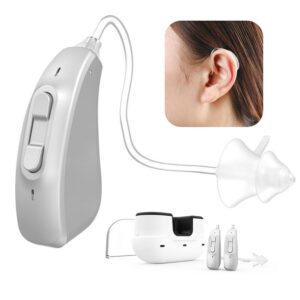
Receiver-in-Canal (RIC) hearing Aids
RIC (or RITE) devices place the speaker directly inside the ear canal while the body of the device sits behind the ear.

- Pros
- More natural sound quality
- Very comfortable and lightweight
- Less visible than traditional BTE models
- Excellent speech clarity
- Cons
- The receiver is more sensitive to earwax and moisture
- Not ideal for users with excessive wax buildup
- Best for:
- Most adults with mild to severe hearing loss want comfort and a discreet design.
In-the-Ear (ITE) Hearing Aids
ITE hearing aids fit completely in the outer ear and are custom-molded.
- Pros
- Easy to insert and remove
- A larger size allows more powerful features
- Good option for users with limited finger dexterity
- Cons
- More visible than smaller custom styles
- More prone to picking up wind noise
- Best for:
- Seniors or users who prefer simple handling and a custom fit.

In-the-Canal (ITC) hearing Aids
These sit partly inside the ear canal, offering a balance of size and functionality.

- Pros
- More discreet than ITE
- Natural sound collection from the ear’s anatomy
- Comfortable and lightweight
- Cons
- Smaller batteries
- Not ideal for severe hearing loss
- Best for:
- Adults with mild to moderate hearing loss who want a balance of visibility and features.
Completely-in-Canal (CIC) hearing Aids
CIC hearing aids are almost invisible when worn.
- Pros
- Very discreet appearance
- Reduced wind noise
- Natural listening experience in quiet settings
- Cons
- Limited features
- Not suitable for severe hearing loss
- It can be difficult for seniors to insert
- Best for:
- Users who prioritize invisibility and have mild to moderate hearing loss.

Invisible-in-Canal (IIC) Hearing Aids
These are the smallest and most hidden hearing aids, placed deep inside the ear canal.

- Pros
- Nearly invisible
- Very natural sound pickup
- Cons
- Minimal features
- Not ideal for narrow ear canals
- Not suitable for severe hearing loss
- Best for:
- Discreet users with mild to moderate hearing loss.
Which Type of Hearing Aid Is Best?
There is no “one-size-fits-all” answer — the best hearing aid depends on your hearing level, lifestyle, budget, and comfort preferences.
However, Receiver-in-Canal (RIC) models are considered the most balanced choice for most adults because they offer:
- Excellent sound quality
- Comfortable fit
- Discreet appearance
- Advanced features like Bluetooth and rechargeability
For users seeking overall performance + comfort, RIC is often the best starting point.

What Is the Most Comfortable Hearing Aid Style?
RIC and ITC models are widely considered the most comfortable because they are:
- Lightweight
- Positioned naturally in or around the ear
- Less likely to cause pressure
For individuals with sensitive ears or those who wear devices for extended periods, RIC devices typically offer the best comfort.
Which Hearing Aid Is Best for Severe Hearing Loss?
For severe or profound hearing loss, the best choices are:
1. BTE (Behind-the-Ear) models
The strongest amplification, most durable, and supports high-power earmolds.
2. High-power RIC (Receiver-in-Canal) models
Modern RIC power receivers can also support severe loss, with better comfort and sound quality.
Custom in-ear models (ITE/ITC/CIC/IIC) are generally not powerful enough for severe loss.
Which Hearing Aid Is Best for Senior Citizens?
For older adults, the best options are those that are easy to wear, easy to clean, and durable.
Recommended for seniors:
- BTE – largest, easiest to handle, very reliable
- ITE – custom-made, simple to insert and remove
- RIC – comfortable, light, and works well for many hearing levels
Seniors often prefer:
- Rechargeable batteries
- Bluetooth for phone calls
- Larger buttons or controls
For elderly users with dexterity challenges, BTE or ITE models are usually the most practical.
Conclusion
Choosing the right hearing aid involves understanding your hearing needs, comfort preferences, and lifestyle. Each hearing aid style has its own advantages, from the power of BTE models to the near-invisibility of IIC devices.
Whether you’re a first-time user, an older adult, or someone with severe hearing loss, today’s hearing aid technology offers a customized solution for every need. Working with a professional hearing specialist and selecting the right accessories — such as wax guards, domes, tubing, and earmolds — ensures the best long-term hearing performance.