hearing Loss can significantly affect communication, independence, and overall quality of life. For people with severe to profound hearing loss, standard hearing Aids may not always provide enough amplification or clarity. Fortunately, modern hearing technology offers several specialized solutions designed to address higher levels of hearing impairment.
In this guide, we explore the most effective hearing aid types for severe to profound hearing loss, explaining how they work and who they are best suited for.
Understanding Severe to Profound Hearing Loss
Hearing loss is typically categorized based on how loud sounds must be before they can be heard.
- Severe hearing loss: Sounds must be around 70–90 decibels or louder to be heard.
- Profound hearing loss: Sounds must exceed 90 decibels to be detected.
At these levels, everyday sounds such as normal conversations, traffic noise, or alarms may become difficult or impossible to hear without assistance. While conventional hearing Aids can help many people, individuals with severe hearing loss often require devices with higher amplification power or alternative hearing technologies.
1. High-Power Behind-the-Ear (BTE) Hearing Aids
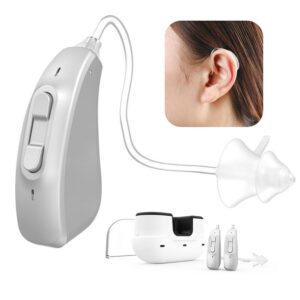
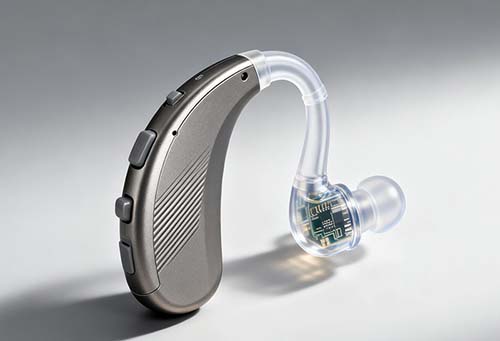
Behind-the-ear (BTE) hearing Aids are one of the most common solutions for people with severe hearing loss. These devices sit behind the ear and connect to a custom earmold that fits inside the ear canal.
How They Work
BTE hearing aids capture sound through a microphone, amplify it using a powerful internal amplifier, and deliver the sound through the earmold into the ear canal.
Why They Are Effective
BTE devices are larger than many other hearing aid styles, allowing them to include stronger amplification systems and larger batteries. This makes them particularly suitable for individuals who need high levels of sound amplification.
Advantages
- Strong amplification power
- Suitable for long-term daily use
- Easier maintenance and adjustment
- Compatible with advanced digital features
Limitations
Although powerful, BTE hearing aids may still be insufficient for some people with profound hearing loss, especially when speech clarity is severely affected.
2. Cochlear Implants
Cochlear implants are an advanced hearing solution designed for individuals who receive limited benefit from traditional hearing aids.
How They Work
Unlike hearing aids, which simply amplify sound, cochlear implants bypass damaged parts of the inner ear and directly stimulate the auditory nerve using electrical signals.
The system typically includes:
- An external processor worn behind the ear
- An internal implant placed surgically under the skin
Sound signals are captured by the processor, converted into digital signals, and transmitted to the implant, which stimulates the auditory nerve and sends signals to the brain.
Who They Are For
Cochlear implants are often recommended for people with severe to profound sensorineural hearing loss who struggle to understand speech even with powerful hearing aids.
Benefits
- Improved speech recognition
- Better ability to detect environmental sounds
- Enhanced communication ability in daily life
3. Bone-Anchored Hearing Devices
Bone-anchored hearing devices use a different approach known as bone conduction to transmit sound.
How They Work
Instead of sending sound through the ear canal, these devices convert sound into vibrations that travel through the skull directly to the inner ear.
The system typically consists of:
- An external sound processor
- A small implant anchored in the skull bone
Suitable Candidates
Bone-anchored devices are often used for people with:
- Conductive hearing loss
- Mixed hearing loss
- Chronic ear infections
- Anatomical ear canal problems
Advantages
- Bypasses the outer and middle ear
- Helpful when traditional hearing aids cannot be worn
- Can provide clearer sound for certain types of hearing loss
4. Active Middle Ear Implants
Active middle ear implants are another alternative for individuals who cannot achieve sufficient results from conventional hearing aids.
How They Work
These implants convert sound into mechanical vibrations that directly stimulate the bones of the middle ear or the inner ear structures.
Because the device interacts more directly with the hearing system, it can provide a more natural sound perception in some cases.
Benefits
- Reduced feedback issues
- Improved sound quality
- Suitable for moderate to severe hearing loss
This technology is often considered when traditional hearing aids cause discomfort or fail to deliver adequate sound clarity.
5. Auditory Brainstem Implants
For individuals whose auditory nerve is damaged or absent, even cochlear implants may not be effective. In these rare situations, auditory brainstem implants may be considered.
How They Work
Instead of stimulating the cochlea or auditory nerve, these implants send electrical signals directly to the brainstem’s hearing pathways.
Typical Candidates
Auditory brainstem implants are usually used for people with conditions such as:
- Severe damage to the auditory nerve
- Certain neurological disorders
- Tumor-related nerve damage
While not as common as other hearing devices, they can provide sound awareness and improved environmental hearing for individuals who have no other hearing restoration options.
Choosing the Right Hearing Solution
Selecting the best hearing device for severe to profound hearing loss depends on several factors, including:
- The type of hearing loss
- The degree of hearing impairment
- Speech recognition ability
- Ear anatomy and medical conditions
- Lifestyle and communication needs
A complete hearing evaluation conducted by an audiologist or hearing specialist is essential to determine the most appropriate solution.
Conclusion
Severe to profound hearing loss requires more advanced hearing technology than standard amplification devices. Fortunately, modern solutions offer several effective options, including:
- High-power behind-the-ear hearing aids
- Cochlear implants
- Bone-anchored hearing devices
- Active middle ear implants
- Auditory brainstem implants
Each device type serves a different purpose and works best for specific hearing conditions. With the right diagnosis and technology, many people with severe hearing loss can significantly improve their ability to communicate and interact with the world around them.